Every time you ask why something happened or what came next, you are already thinking in cause and effect. That instinct is exactly what this type of essay relies on. A cause-and-effect essay explores the relationship between an event and its outcomes or between multiple contributing factors and a single result. The goal is not just to describe what happened, but to explain the connection between things in a clear, logical way.
Done well, this type of essay sharpens your critical thinking, teaches you to build an argument with evidence, and shows your reader how the world actually works — one event leading to the next. So whether you have been assigned a topic or are choosing your own, this guide walks you through everything from structure to common traps.
What You Are Actually Being Asked to Do
A cause-and-effect essay is not a narrative. You are not simply telling a story about events in sequence; you are analysing why one thing led to another and what followed as a result. That distinction matters because it changes how you write every sentence.
For example, saying “People started working from home during the pandemic” is a narrative statement. Saying “The shift to remote work during the pandemic reduced commuting stress but also blurred the boundary between personal and professional life” is cause-and-effect thinking. The second version connects events and explains their relationship, which is what your essay needs to do throughout.
The Three Structural Approaches
Before you write a single sentence, you need to decide how to organize your essay. There are three main structural approaches, and the right choice depends on your topic and the complexity of the relationships.
| Structure | Best Used When | How It Works |
| Block | Causes and effects are clearly separate | Discuss all causes first, then all effects in a second block |
| Chain | Events follow a step-by-step sequence | Each cause is immediately followed by its direct effect, creating a domino-like progression |
| Multiple causes / single effect | Several factors lead to one outcome | Each paragraph covers a different cause; the conclusion ties them to the shared effect |
The block structure works well for shorter essays or when your causes and effects are straightforward enough to stand on their own. The chain structure, on the other hand, is better suited for topics where events are closely linked — think of how one economic decision leads to a market reaction, which in turn affects employment, which then shifts consumer spending. In addition, the chain approach tends to produce a more compelling, narrative-driven essay because each paragraph naturally builds on the last.
When in doubt, ask yourself: Are my causes and effects intertwined, or are they separate categories? That answer points you to the right structure every time.
Building Your Thesis Statement
Your thesis is the engine of the whole essay. In a cause-and-effect essay, specifically, it needs to do one of three things: name a cause and its effects, identify an effect and its causes, or preview a causal chain. Whatever form it takes, it must be specific.
Weak thesis: “Social media has many effects on young people.”
Strong thesis: “Excessive social media use among teenagers contributes to increased anxiety, disrupted sleep patterns, and a distorted sense of self-worth.”
The strong version tells the reader exactly what causes and effects the essay will explore. It also gives your body paragraphs a clear job to do — each one develops a single effect named in the thesis. So write your thesis before your body paragraphs, but revise it after you have finished drafting, since your thinking almost always sharpens as you write.
How to Write Each Section
Introduction
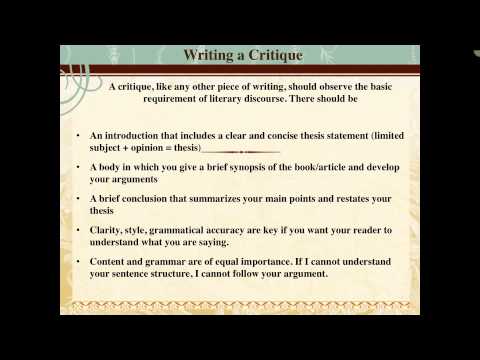
Open with a hook that frames the relationship you are about to explore. A surprising statistic, a short real-world scenario, or a bold claim all work well. Next, provide a brief background to help your reader understand the topic, and close the intro with your thesis.
Body paragraphs
Each paragraph should cover one cause or one effect, depending on your structure. Start with a clear topic sentence that states the paragraph’s point. Follow that with evidence — data, examples, expert opinion, or logical reasoning — and then explain how it connects back to your thesis. Do not just present information and move on; the explanation of the connection is where the real analytical work happens.
Conclusion
Restate your thesis in fresh language, briefly summarize the key relationships you explored, and then zoom out. What does this causal relationship mean in a broader context? What might happen next, or what should be done differently? A strong conclusion does not just wrap up; it gives the reader something to think about after they finish reading.
Transition Words That Hold It Together
One of the most important technical skills in a cause-and-effect essay is signaling causation clearly. Without the right linking language, your reader may not see the connection even when you do. Here are the most useful transition words and phrases, grouped by function:
- Showing cause: because, since, due to, as a result of, owing to, on account of
- Showing effect: therefore, consequently, as a result, thus, so, this led to, which means that
- Showing sequence: first, next, subsequently, following this, in turn, eventually
- Adding related points: in addition, furthermore, moreover, not only that, alongside this
Use these deliberately. Instead of writing “Stress increased. Students performed worse,” write “Because stress levels rose sharply during exam season, students consequently performed below their usual standard.” The second version does not just list two facts — it makes the relationship explicit.
5 Mistakes Students Consistently Make
- Confusing correlation with causation. Just because two things happen together does not mean one caused the other. Always ask: Is there a direct mechanism linking these two things, or are they simply occurring at the same time?
- Going too broad. “Climate change has many effects” is not a workable thesis. Narrow your focus to two or three specific, well-supported relationships.
- Skipping the evidence. Stating that something caused something else is not enough — you need data, examples, or logical reasoning to back it up.
- Using a weak or vague thesis. If your thesis could describe a thousand different essays, it is not specific enough. Rewrite it until it describes only yours.
- Ignoring complexity. Most real-world causes have more than one effect, and most effects have more than one cause. Acknowledging this complexity — even briefly — makes your analysis more credible, not less.
Choosing a Topic That Works
A good cause-and-effect topic has two qualities: the relationship between cause and effect is genuinely interesting, and it is specific enough to be analyzed within your word count. Topics that are too large lead to shallow essays. Topics that are too narrow can run out of substance quickly.
Some areas that produce strong cause-and-effect essays include technology and behavior, environmental policy outcomes, public health decisions, economic trends, and social and cultural shifts. The key in each case is to go one level deeper than the obvious. Instead of “social media causes depression,” consider “the passive consumption of curated content on social platforms reduces real-life social satisfaction.” That level of precision leads to a much more interesting essay.
Learn more about writing a cause and effect essay https://www.ozessay.com.au/blog/cause-effect-essay/
FAQ
What is a cause-and-effect essay?
It’s an essay that explains why something happened and what resulted from it.
What are the two main structures for this essay type?
The block method and the chain (sequential) method.
Where does the thesis go in a cause-and-effect essay?
In a cause-and-effect essay, the thesis statement typically appears at the end of the introduction.
What is the difference between correlation and causation?
Correlation is two things occurring together; causation means one directly triggers the other.
How many causes or effects should I cover?
Two to three well-supported points are ideal for most essays.
What transition words work best for cause-and-effect essays?
Therefore, consequently, because, as a result, and thus